 Auscultify
Heart and lung sounds for PA students, learned in the time you actually have
Cardiology and pulmonology together are a large slice of the PANCE blueprint, and auscultation findings appear in both. Your didactic year gives you a two-hour lab and a mannequin. Auscultify gives you 200+ real recordings and ten-minute sessions you can fit between lectures and rotations.
Free to download · Pro includes a 7-day free trial · Cancel anytime
What PANCE and your preceptors expect you to hear
The cardiovascular and pulmonary sections are two of the largest on the PANCE blueprint, and the clinical-year evaluations ask for a competent physical exam. These are the findings that come up.
Cardiology
- Aortic stenosis vs HCM by maneuver
- Mitral regurgitation and MVP click
- Aortic regurgitation and mitral stenosis
- S3 in heart failure, S4 in hypertension and ischemia
- Atrial fibrillation by rhythm
- Pericardial friction rub
Pulmonology
- Fine crackles: fibrosis, early CHF
- Coarse crackles: pneumonia, bronchiectasis
- Wheeze: asthma, COPD; monophonic vs polyphonic
- Rhonchi and pleural rub
- Diminished or asymmetric sounds
- Heart vs lung source
Exam skills
- All auscultation sites in order
- Bell vs diaphragm, when and why
- Positioning: left lateral, leaning forward
- Presenting a finding cleanly
- Normal vs abnormal screening at speed
Rotations will not give you the rare ones
On family medicine you will hear a hundred normal chests and a flow murmur. On internal medicine, some crackles and an AFib. The mitral stenosis rumble, the opening snap, the pericardial rub, the HCM murmur that gets louder standing: you may not meet them once before PANCE. The exam does not care.
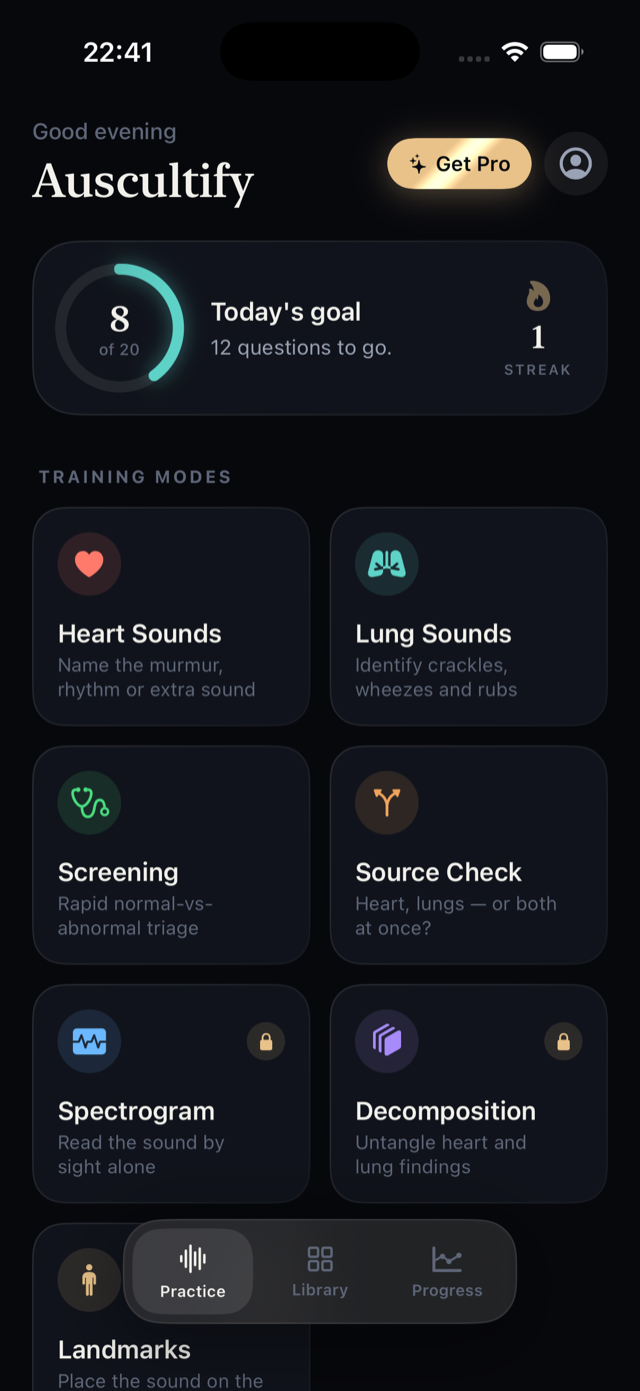
Auscultify plays real recordings of all of them, unlabeled, and asks what you hear. Instant feedback with the reasoning, spaced repetition on your misses, and per-mode accuracy so you know whether cardiology or pulmonology is the weaker ear.
- Heart Sounds, Lung Sounds, Screening and Source Check modes
- Same lesion recorded at multiple sites
- Spectrogram and decomposition (Pro) for mixed chests
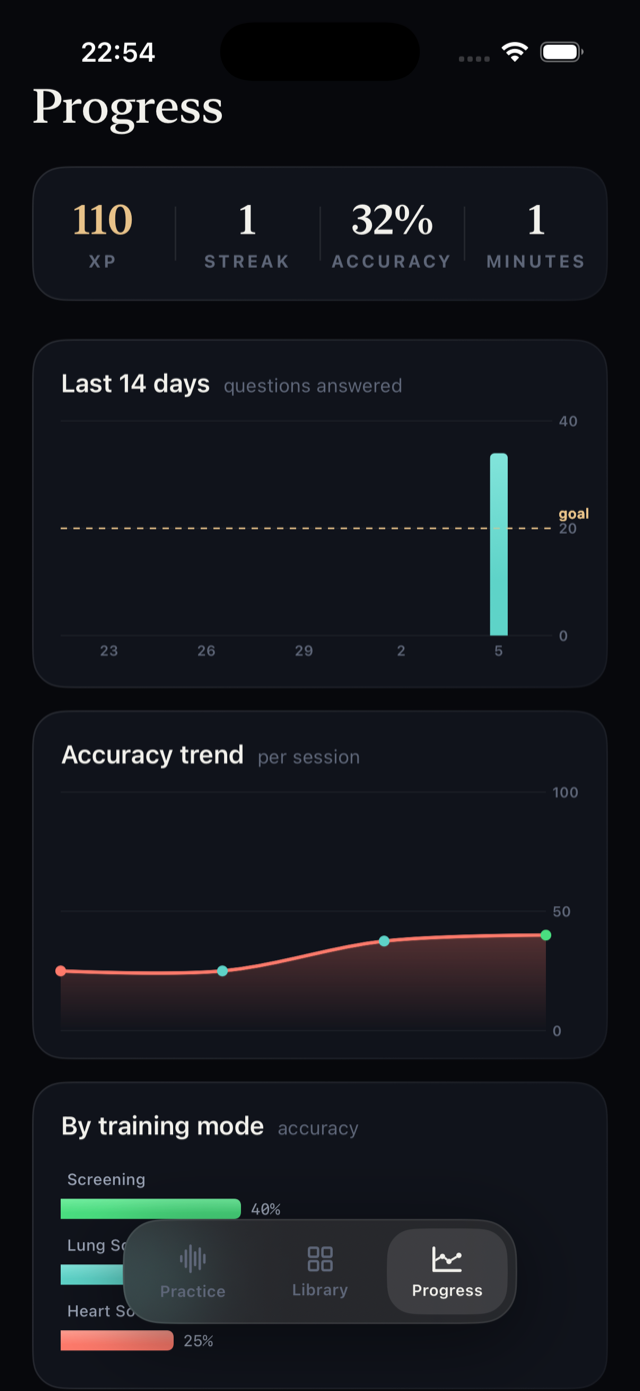
- Progress trends you can show a preceptor
A plan that fits a PA schedule
Didactic year: 10 a day
Screening mode while the physical exam course runs. Normal vs abnormal at every site. It takes four minutes and makes the lab sessions land.
Clinical year: match the rotation
Heart Sounds mode during cardiology and IM, Lung Sounds during pulm, EM and family. Twenty questions on the commute. Let the app weight your misses.
PANCE prep: mixed, timed
Forty questions a day across all modes for the final month, plus the clinical cases to connect sound to diagnosis to management.
Guides PA students use most
Frequently asked questions
Does PANCE test heart and lung sounds?
Yes. Cardiovascular and pulmonary content are two of the largest sections of the PANCE blueprint, and questions routinely present auscultation findings, such as a holosystolic murmur radiating to the axilla or late inspiratory crackles, as the key to the diagnosis or next step.
What heart sounds should a PA student know?
Normal S1 and S2 at each site, S3 and S4 gallops, the murmurs of aortic stenosis, aortic regurgitation, mitral regurgitation, mitral stenosis, MVP, HCM, tricuspid regurgitation and VSD, plus how each changes with standing, squatting, Valsalva, handgrip and inspiration. Atrial fibrillation by rhythm and a pericardial rub round it out.
What lung sounds should a PA student know?
Normal vesicular breathing, fine and coarse crackles, wheezes, rhonchi, pleural friction rub and diminished or asymmetric sounds, and which diagnosis each points to. Being able to say whether a sound is from the heart or the lungs matters as much as naming it.
How do I practice auscultation between rotations?
Short daily quizzes on real recordings. Auscultify is built for ten-minute sessions with a daily goal, instant feedback and spaced repetition. Match the mode to the rotation you are on.
Is Auscultify free for PA students?
Yes. Free to download with daily practice at no cost. Pro adds spectrogram training, decomposition, landmark drills and unlimited sessions, with a 7-day free trial you can cancel anytime.
Does the app help with the physical exam practical?
Yes. Landmarks mode (Pro) drills where to listen and what to expect at all 12 sites on a chest-wall map, and the free guides cover sequence, positioning and how to present a finding.
Meet the rare findings
before PANCE does.
Real recordings of every murmur, gallop, crackle and wheeze, in ten-minute sessions. Free to download, Pro trial included.
Download Auscultify on the App StoreFree to download · 7-day Pro trial · Cancel anytime